
Five Films for Ren Faire Prep
Ren Faire’s take a lot of prep.
Whether you’re researching, sewing, leatherworking, cooking, brewing, painting or executing any of the other skills that go into manifesting that gloriously bizarre aesthetic that marries fantasy to history, there are a great many hours spent where having a movie on in the background makes it not only easier to concentrate but offers a chance of getting us into the ‘vibe’ of the Faire.
Now there are a great deal of excellent films that resonate with the Ren Faire aesthetic, but what follows here are five that may have slipped under the radar and are perfect for putting on in the background while you sew up that tunic, glue on that last horn, or just want to sip a goblet of mead and dream about the fun to come! To that end, what follows is a meditation on films you might not have heard of that fit that Ren Faire vibe and make for great ambience. You don’t have to watch these with your whole attention, though personally I think they are truly great films and deserve a proper viewing, as any given scene will get you in the Ren Faire mood.
Dragonheart (1996)
Ok, so our first film here is a bit on the goofy side, but what Ren Faire isn’t a little goofy? That’s half the charm. Besides, this one is about as historically accurate as anything you’ll see at a Ren Faire. The premise is that dragons were originally guardians, allies of the great King Arthur, but were vilified by increasingly corrupt rulers. The protagonist, played by Kevin Quaid, lives this process out in the most painful way that he possibly could, ultimately learning how to remain true to what really matters no matter the calamity or betrayal. It’s a fun adventure with special effects that were pretty good for their day, though they haven’t aged as well as one might have hoped. It’s worth it though to listen to Sean Connery wax nostalgic about the days when King Arthur’s knights rode dragons and see David Thewlis, who portrayed Lupin in the Harry Potter movies, get his most vile villainousness on.
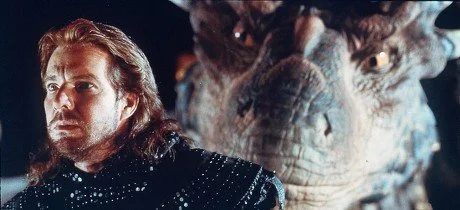
One sequel and three prequels followed that were direct-to-video …
If you’ve seen this one too many times or want something adjacent to it, Disney’s much darker Dragonslayer (1981) is a good substitute with effects by Industrial Light and Magic (of Star Wars fame) and one of the best realized on-screen dragons in cinematic history. Retelling the story as a kind of ‘wizard noir’ take on the St. George and the Dragon trope, Dragonslayer may not be suitable for younger viewers, which can also be said of Excalibur, Boorman’s film from the same year — more on this one later. I suppose you could just put on Game of Thrones again, but … I mean … you could … or …
Ivanhoe (1952)
Nobody did the pageantry of the High Middle Ages like Hollywood around 1950. Since the ‘30s, the new color processes in film had Hollywood execs looking to cram as much color on screen as they could and Chivalric Heraldry did gaudy like no one else! By the 1950’s though, film was turning toward increasing “realism” and the highly formalized, gestural performances of the stage seemed heavy-handed when the camera got up close and personal. Ivanhoe was one of the greatest chivalric melodramas in the style of The Adventures of Robin Hood (1938) and Knights of the Round Table (1953 — also starring Robert Taylor). If you’re looking for witty repartee with rejoinders like “let him enter in peace and depart in peace, or else depart in pieces” amid pitched battles (one of which supposedly hospitalized at least one of the combatants), iconic music, and magnificently pseudo-medieval clothing, Ivanhoe delivers the goods!
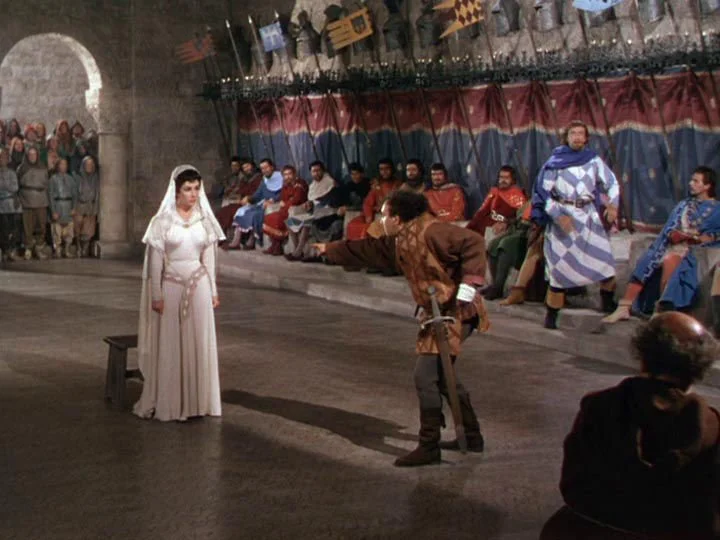
The drama is personal, political, religious and martial, with themes of corrupted authority and systemic bigotry. Good thing we left all that behind in the Middle Ages!
As an example, in Sherwood Forest with Robin Hood hiding in force, the eponymous hero, masquerading as a traveling troubadour, offers to lead his arch-rival, Sir Bois-Guilbert, to the hall of Ivanhoe’s estranged father for a night’s lodging. Bois-Guilbert has no idea that the musician before him is actually the knight who defeated him at the joust not a few months earlier and cautions him “lead on, minstrel, but mark you this: one false step and you’ll sing a very different song, my friend.” Ivanhoe answers, “I have a song for every occasion, my lord.” Bois-Guilbert’s companion, the cruel Sir Malvoisin, clarifies, “he means he’ll lop you’re head off,” to which Ivanhoe responds “yes, sire. I knew what he meant.”
It may seem a bit artificial to modern ears, but peak dialogue nonetheless …
Some other good substitutes for this slot are the aforementioned Knights of the Round Table (1953) or The Vikings (1958) with Kirk Douglas and Ernest Borgnine (which served as the model for the final sword-fight in Secret of Nimh in 1982). If you really need something chivalric but still more recent, Knight’s Tale (2001) can fit this slot. It stars Heath Ledger (the Joker from the Dark Knight, 2008), Rufus Sewell (The Diplomat and Old, 2021), Shannon Sossamon, Mark Addy (King Baratheon in Game of Thrones), and Alan Tudyk. If you’re not familiar with Alan Tudyk’s work, I’m not helping you out; you’re already a lost soul.
The Sword in the Stone (1963)
Disney’s foray into animated Arthurian storytelling features some of the catchiest songs ever put into a medieval mage’s mouth — of course, anything by the Sherman Bros. is bound to be excellent! — but in terms of faithful adaptations of actual medieval legends or even the source material by T.H. White, The Once and Future King, which wasn’t even five years old when they started production, it’s about as fluffy and inauthentic as you can get. That said, the film has more heart than it knows what to do with. It also has one of the all time best wizard duels that is strangely not in the book at all but probably the most authentically Celtic moment in the film.
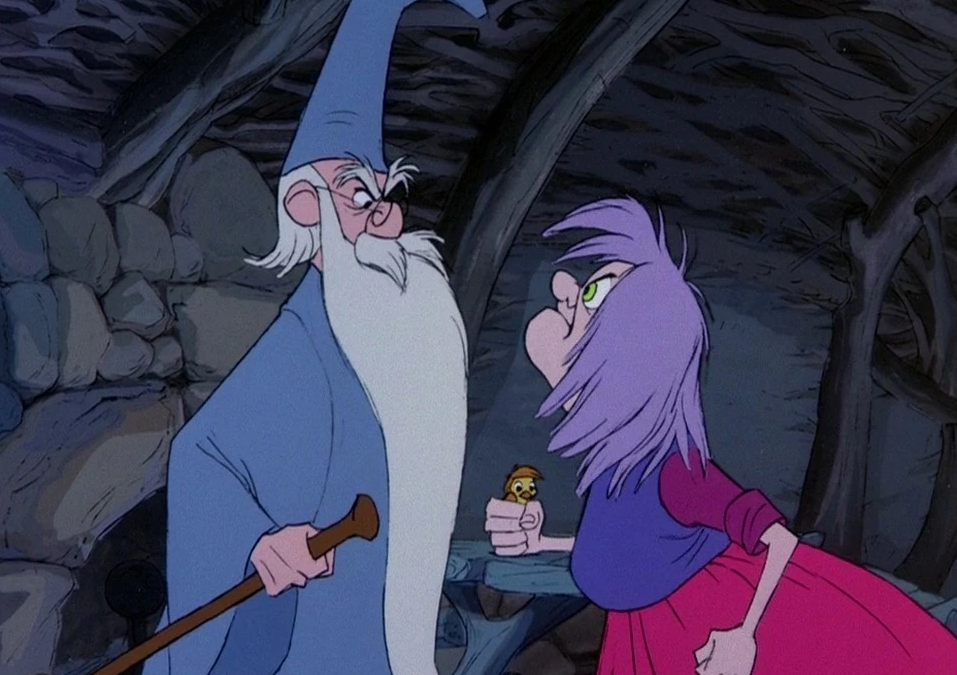
Combat by shapeshifting is such an old story — there’s a traditional ballad, the stories of Taliesin and Fionn MacCumhaill just to name a few — that Neil Gaiman tapped into it for his Sandman comics, setting it in Hell and against a demon.
The film is effectively a vehicle for Walt Disney’s own ideas about progress and intelligence, with Merlin beginning the film alone in the woods complaining about everything being “one big medieval mess!” He describes jousting as “one fool trying to knock off another with a bit of a stick” — which is a tragically reduced version of one of the book’s funniest moments — and at one point creates a magical assembly line to finish Arthur’s chores faster. His arc, though, is a subtle assertion of Walt’s own love for fantasy and medieval panache, what Mark Twain considered “sham grandeurs, sham gauds, and sham chivalries of a brainless and worthless long-vanished society.” After Merlin “blows [himself] to Bermuda,” however, young Arthur must manage the pulling of Excalibur from the stone by himself (with a bit of advice from a “highly educated owl,”). Panicking at being made king, Arthur calls out for Merlin who rockets “back from Bermuda and the 20th century” stating vehemently, “and believe me you can have it! one big modern mess!” — a sentiment familiar to many of us at the Ren Faire.
If The Sword in the Stone is ‘old hat’ or a bit too ‘kiddy’ for you, then you might want to go for John Boorman’s wildly more adult Excalibur (1981). This is a very «ahem» robust retelling of Thomas Mallory’s own La Morte D’Arthur, itself a late 15th century critique of the chivalric reality at the end of the War of the Roses. If you’re not into late 70’s-style sword-and-sorcery doing high-handed epic, then maybe the Merlin (1998) mini-series with Sam Neill and its 2008 follow-up, Merlin’s Apprentice, is the way to go. These kind of split the difference between Sword in the Stone and Excalibur but aren’t as staid as the oft forgotten Merlin and the Sword (1985) with Malcolm MacDowell (famous for Clockwork Orange in 1971 and killing James T. Kirk in Star Trek: Generations in 1994).
Wizards (1977)
Ok, so hear me out on this one …
Yes, it’s technically science-fiction since it takes place several million years in the future. Yes, about a fifth of the movie is comprised of rotoscoped shots from war movies and footage from WWII, and, yes, it has enough blood and “suggestive themes” in it that you may want to think twice about letting any ‘tweens stay in the room while it’s on. It is, after all, a film by Ralph Bakshi …
… But Wizards is perhaps the most thoroughly Ren Faire of all the films on this list …
… at least in spirit.
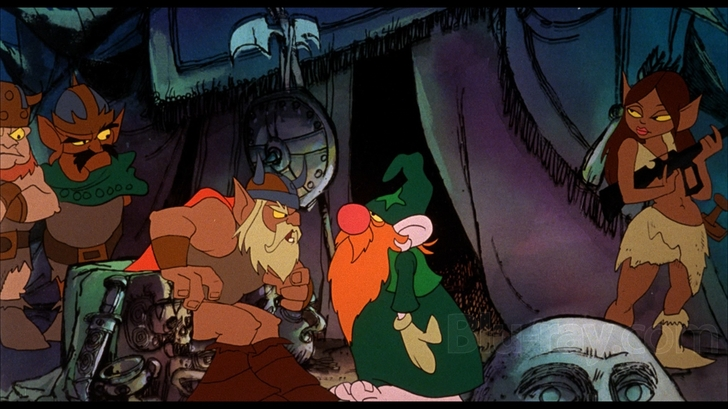
An actual picture of me — the one in the middle — at the last Ren Faire … at least this is what I thought I looked like.
If many of the movies on this list lean into the ‘history’ aspect of the Ren Faire (albeit not its Elizabethan ones), Wizards leans hard into the ‘fantasy,’ specifically that wild kind of sci-fi/fantasy that seemed to only exist between 1963 and 1981. This is Frank Frazetta illustrating Conan the Barbarian before Arnold Schwarzenegger was associated with the character. This is Jack Vance writing the “Demon Princes” novels and The Eyes of the Overworld, both of which are overtly science fiction but feel more fantasy than anything else. This is the time before Alan Lee and John Howe fixed our image of Tolkien’s elves as etherial, long-haired, and silvery elitists with a preference for Art Nouveau, when the art of Arthur Rackham was more influential in visualizing fairies and goblins as chthonic agents of spider-web and tree-sap than transcendent authority, leading Lester Abrams and Arthur Rankin Jr. to devise their distinctive look of the Hobbit in 1977. After ‘77, Sci-Fi and Fantasy would part ways with Tolkien leading the way for Fantasy through Dungeons & Dragons. As for Sci-Fi, it tended to travel along two tracks: it could focus on smooth, glossy progressivism as it did in Star Trek, or on a “lived in” and dystopic grittiness as in Alien (1979), combining these variously into films like Blade Runner (1982) and Robocop (1989). But gone was the hybrid styling of Fantastic Planet (originally La Planète Sauvage, 1973) and Zardoz (1974) with a young Sean Connery sporting a red loincloth and crossed bandoliers. Heavy Metal (1981) seems to have been the last gasp of this blended sci-fi/fantasy.
This brings us back to Wizards. I can think of no other film that so deliberately combines fantasy with science fiction, telling “an illuminating history bearing on the everlastings struggle for world supremacy fought between the powers of technology and magic.” If this conflict seems so simple as to be obvious, maybe even shallow — of course science and magic are opposites! One uses machines and the other uses spells! — then the tale’s very unfolding breaks down this seeming dichotomy and undermines the foundation of the conflict itself. I won’t spoil how it does so but will just say that it’s well worth the ride! “I wanna show you a trick mother showed me when you weren’t around. You know, to use on special occasions like this.” Wizards can easily be mistaken for a gratuitous mashup of tropes, visual tricks and easy gags, but when you really look at what’s happening, the real story is far deeper and more significant than it first seems — a lot like a Ren Faire!
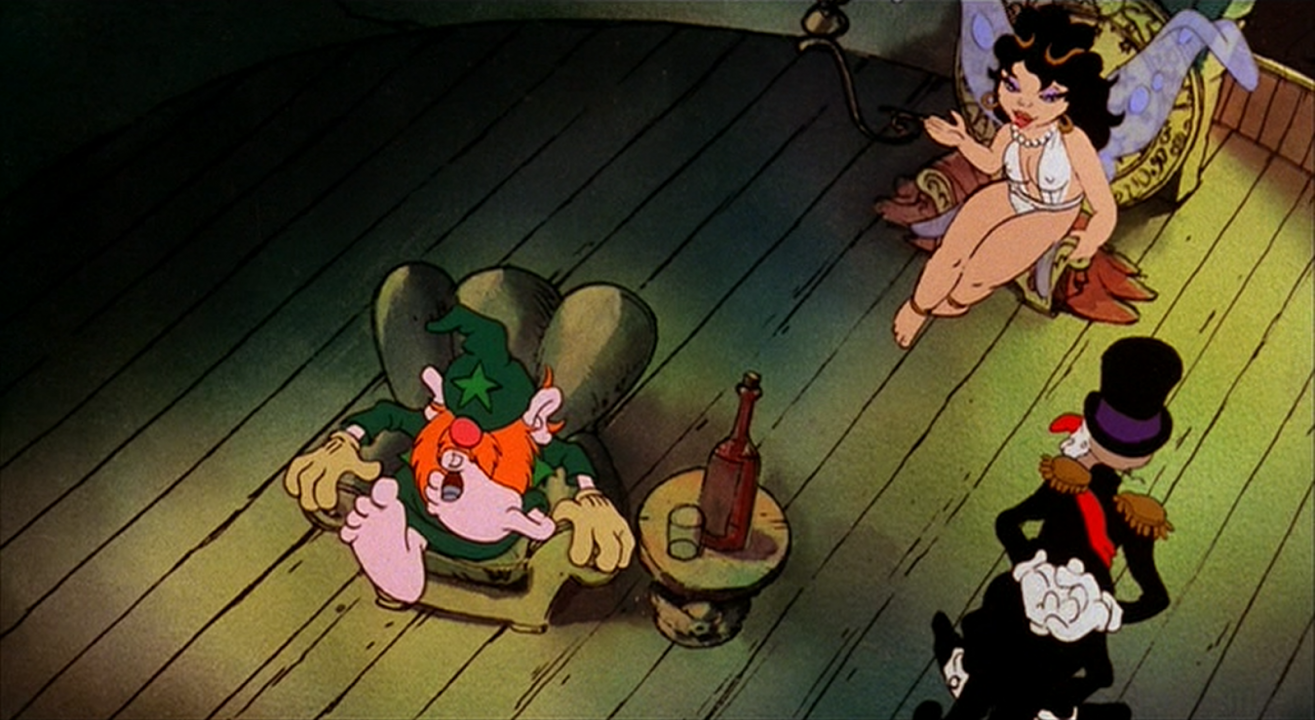
There comes a point when the very incongruity becomes part of the charm … and kind of the point.
Besides all that, where else could you go to hear Mark Hamill voice a pixie named “Sean, Leader of the Knights of Stardust, the Protectors of Dolan, King of the Mountain Fairies?”
A Midsummer Night’s Dream (1999)
It’s Shakespeare that puts the “Renaissance” in Ren Faire, and there are no better Shakespearean plays to get you in the mood than “A Midsummer Night’s Dream.” This is the OG fairy tale that gives us such iconic lines as “though she be but little, she is fierce,” and “what fools these mortals be!” Oberon … Titania … Puck … this is the play that gives us the fairies and magic, spells and happily-ever-afters, so it is, hands down, the Ren Faire play of choice.
Of all the movies and productions of this you could watch, though, the version from 1999 is the most familiar aesthetically with its distinctive late-90’s styling and absolute Rock-Star cast. The Fairy Monarchs are played by Rupert Everett (Prince Charming in the Shrek movies) and Michelle Pfeiffer (Ant Man and the Wasp, 2018, and Batman Returns, 1992). Stanley Tucci plays Puck — you might know him as the inventor of the Super Soldier Serum in Captain America: The First Avenger (2011) — while the lovers are played by Calista Flockhart (April Howsam in Invincible, and Cat Grant in the Supergirl series, 2015—2018), Anna Friel (Land of the Lost in 2009 and Limitless in 2011), the absolute legend Christian Bale (Christopher Nolan’s Batman and Gorr the God Butcher in 2022’s Thor: Ragnarok), and Dominic West (who played Guy Dexter in Downton Abbey, and Rudder the sea lion in 2016’s Finding Dory). In the same year that he performed here in Midsummer Night’s Dream, Dominic West also played Jerus Janneck, one of the palace guards on Naboo in Star Wars: The Phantom Menace!
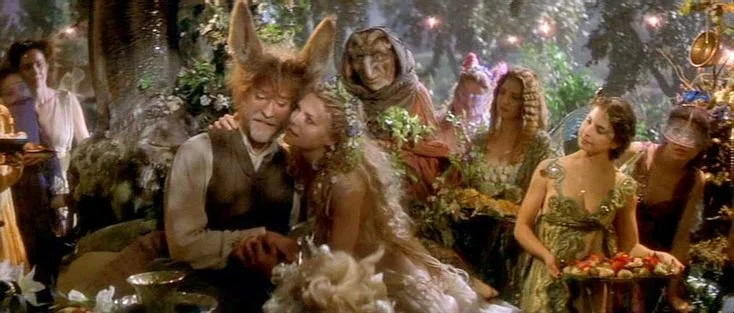
The ‘90s was characterized by a distinctively maximal aesthetic, familiar at Ren Faires … and maybe certain Italian restaurants.
The role of Bottom, the poor fool who winds up getting his head turned into a donkey’s, is played by the inestimable Kevin Kline, whose voice you might recognize as Captain Phoebus in Disney’s Hunchback of Notre Dame (1996), the affably rapscalious Tulio in El Dorado (2000), Andre the castle chef in The Tale of Despereaux (2008), and most recently Mr. Fischoeder in Bob’s Burgers (2011—2026). He appeared as Maurice, Belle’s father in the “live action” adaptation of Disney’s Beauty and the Beast (2017), but perhaps his most absolutely iconic role — definitely his most oft-quoted — is the uniquely challenged Otto in A Fish Called Wanda (1988). Alongside him are the likes of David Strathairn as Prince Theseus (who portrayed the missing Arthur Spiderwick from the 2008 Spiderwick Chronicles and Admiral Stenz in the recent Godzilla movies), and Sam Rockwell as Flute. You might recognize Rockwell as Guy (Crewman #6) in Galaxy Quest in the same year, Zaphod Beeblebrox in Hitchiker’s Guide to the Galaxy (2005), Doc in Cowboys & Aliens (2011), and Justin Hammer in the Iron Man movies among many, many others (including the voice of Wolf in The Bad Guys.)
The point here is that, if you’re a fan of popular movies from the last 25 years or so and especially the kind of Sci-Fi/Fantasy that appeals to those of us into the Ren Faire aesthetic, Michael Hoffman’s Midsummer Night’s Dream feels like going to a Faire with your best friends. Ostensibly set in the late 19th century, the fashions are elegant and historical-feeling without being overly archaic or alien to modern sensibilities, while the magic has that maximal, Victorian feel that lives in the unique intersection of Dark Academia and Steampunk.
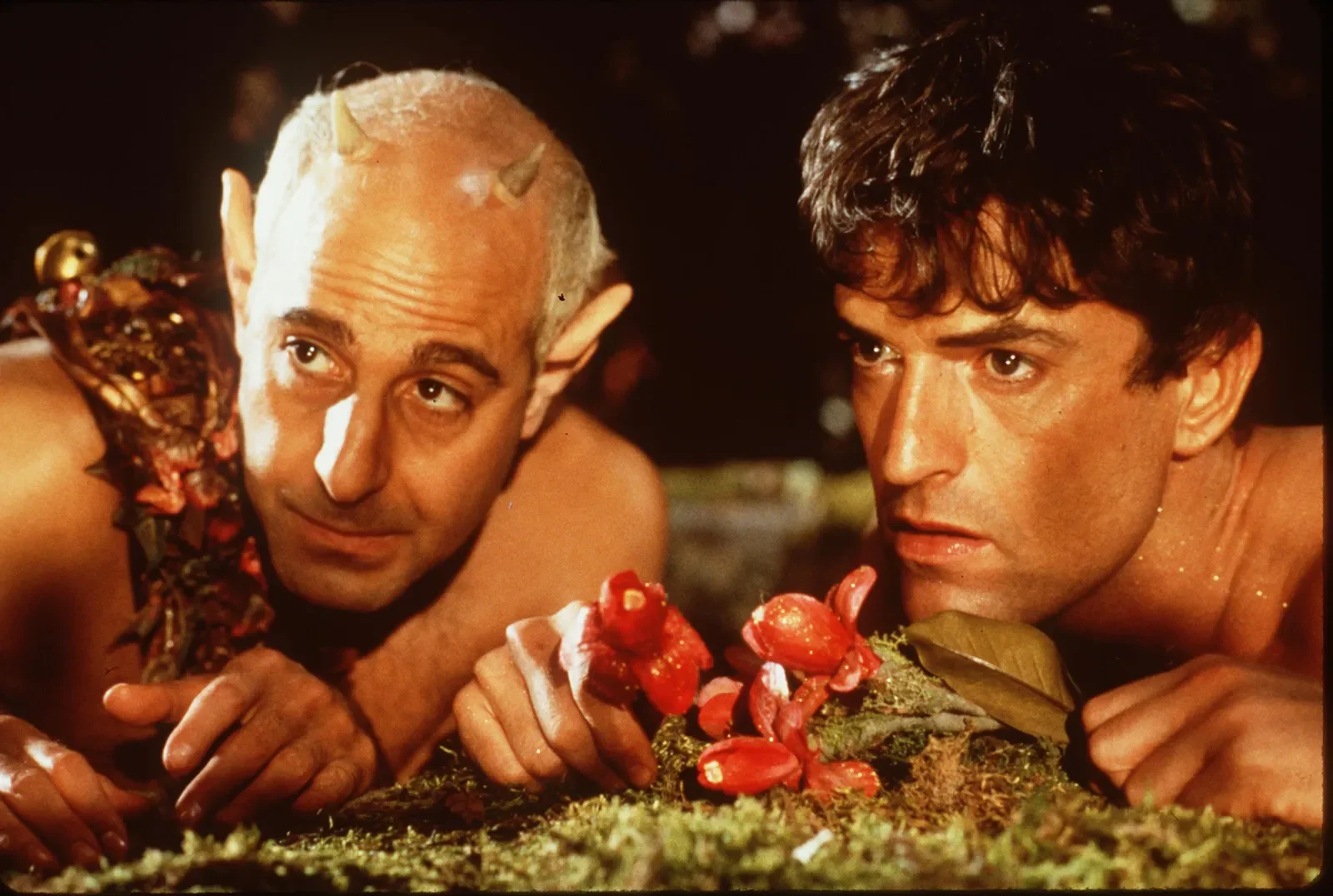
One could do much worse than imitate the costuming in this movie for a Ren Faire.
To wrap this list up, it should be noted why there isn’t more Elizabethan material represented here: none of these films depicts the time of Shakespeare, which is of course the period that Ren Faires tend to focus on. In getting ready for any Ren Faire, you could just focus on Shakespeare, and some people do! There are a great many very well-researched and well-executed films on the Tudor court. Queen Elizabeth (1998) and its sequel Queen Elizabeth: The Golden Age (2008) come to mind, but if you’re doing that you might as well include Wolf Hall (2015), Wolf Hall: The Mirror & the Light (2025) and A Man for All Seasons (1966), not to mention the series The Tudors (2007) and all the other films and series listed on IMDB’s “The Tudors in Film and Series.” Then there are all the magnificent adaptations of Shakespeare’s works and inventive tales about the man himself — movies like Shakespeare in Love (1998) and Hamnet (2025) — worthy of a separate list altogether! This list here is about films that complement your work getting ready for attending a faire, not studying the period or sitting and focusing on one of Shakespeare’s plays.
In future posts, we’ll look at all these other films, present you with tutorials and tips for what you can do to get ready for the Faire, and naturally let you know what we’re doing ourselves to get ready. Until then, may you feast and film with the best, and we’ll see you at the Faire!